Sprintly
Sprintly is a developer-focused SaaS platform for managing projects, sprints, tasks, teams, files, workflows, and engineering operations inside a unified organization workspace.
Building Sprintly
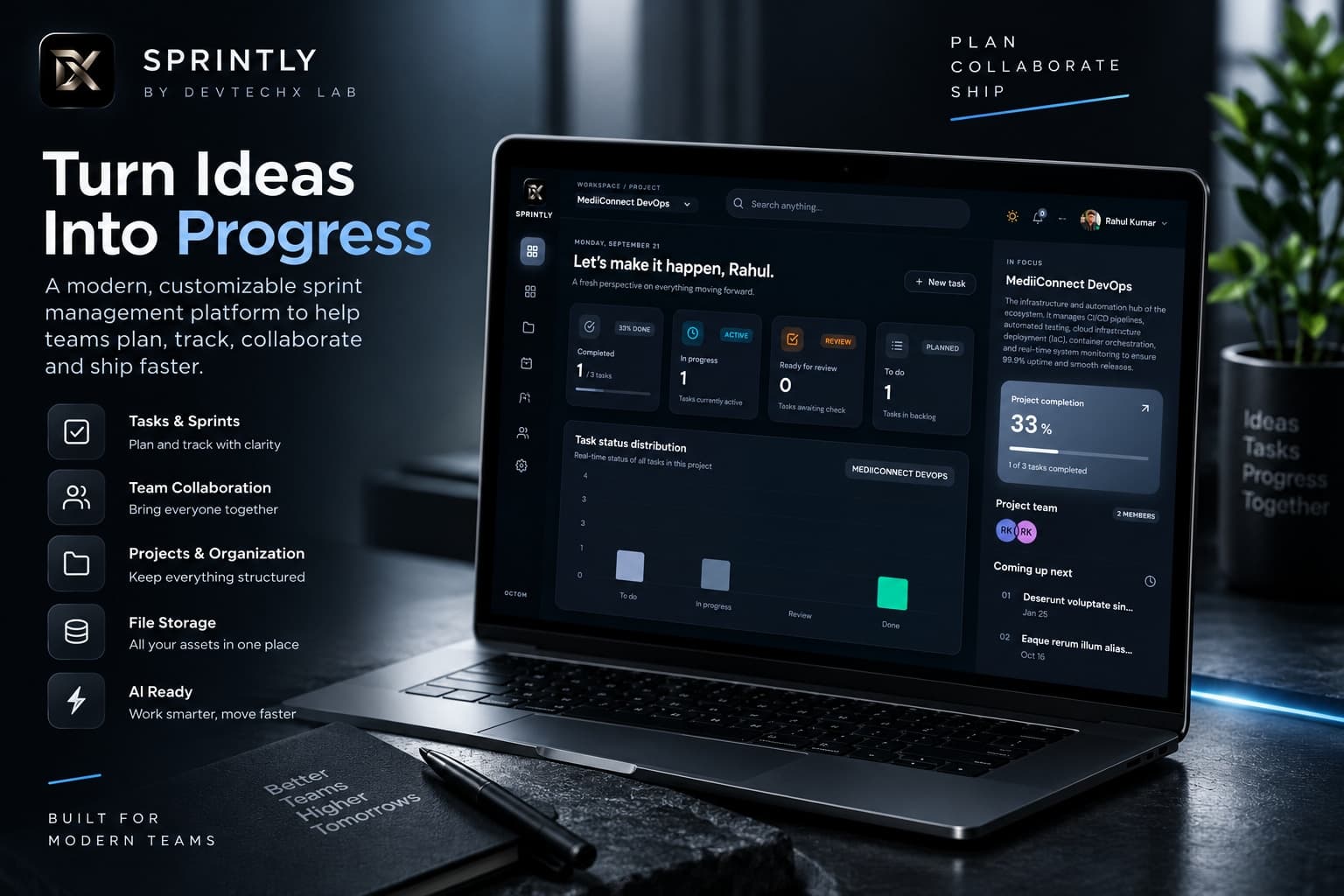
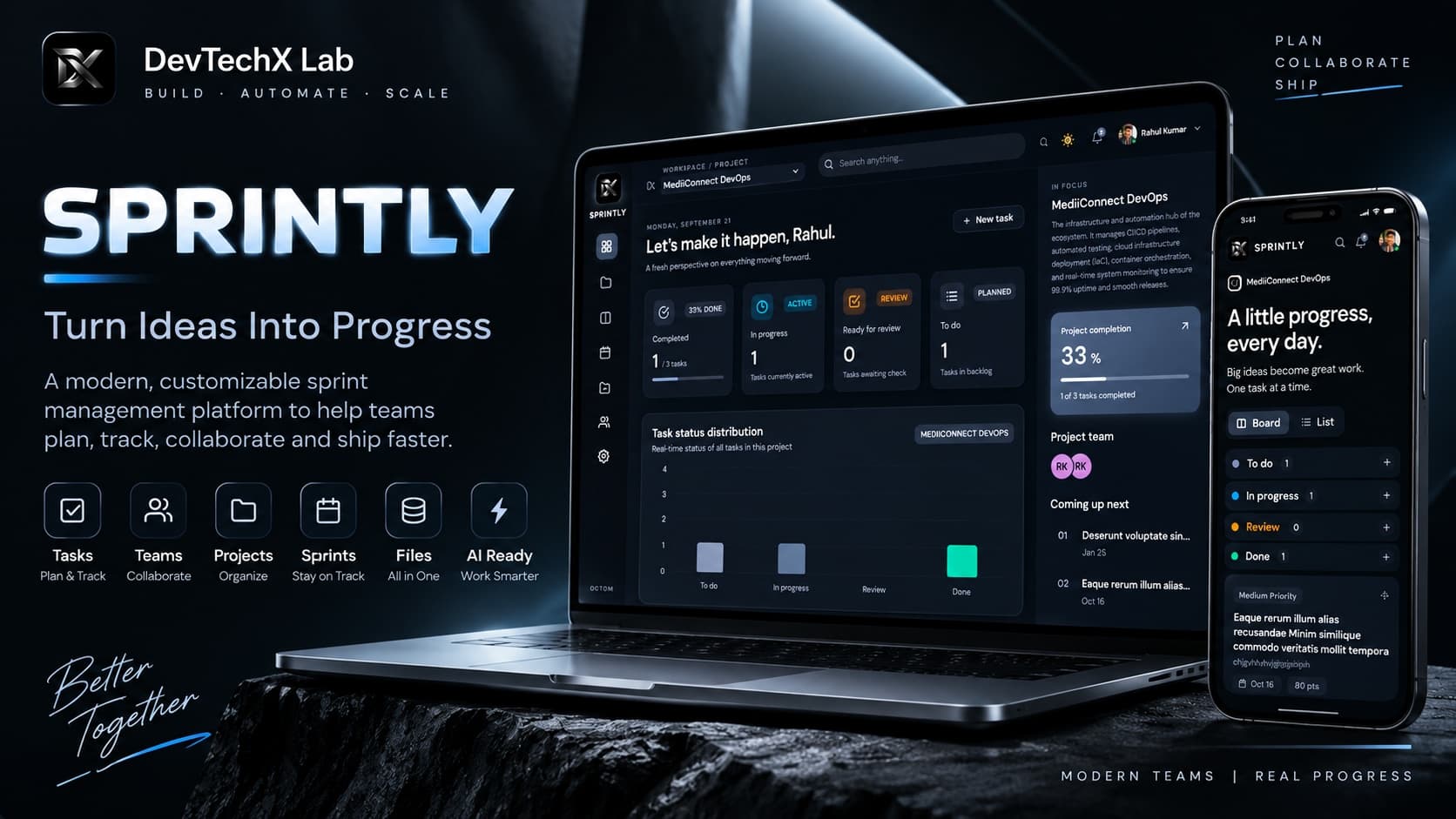
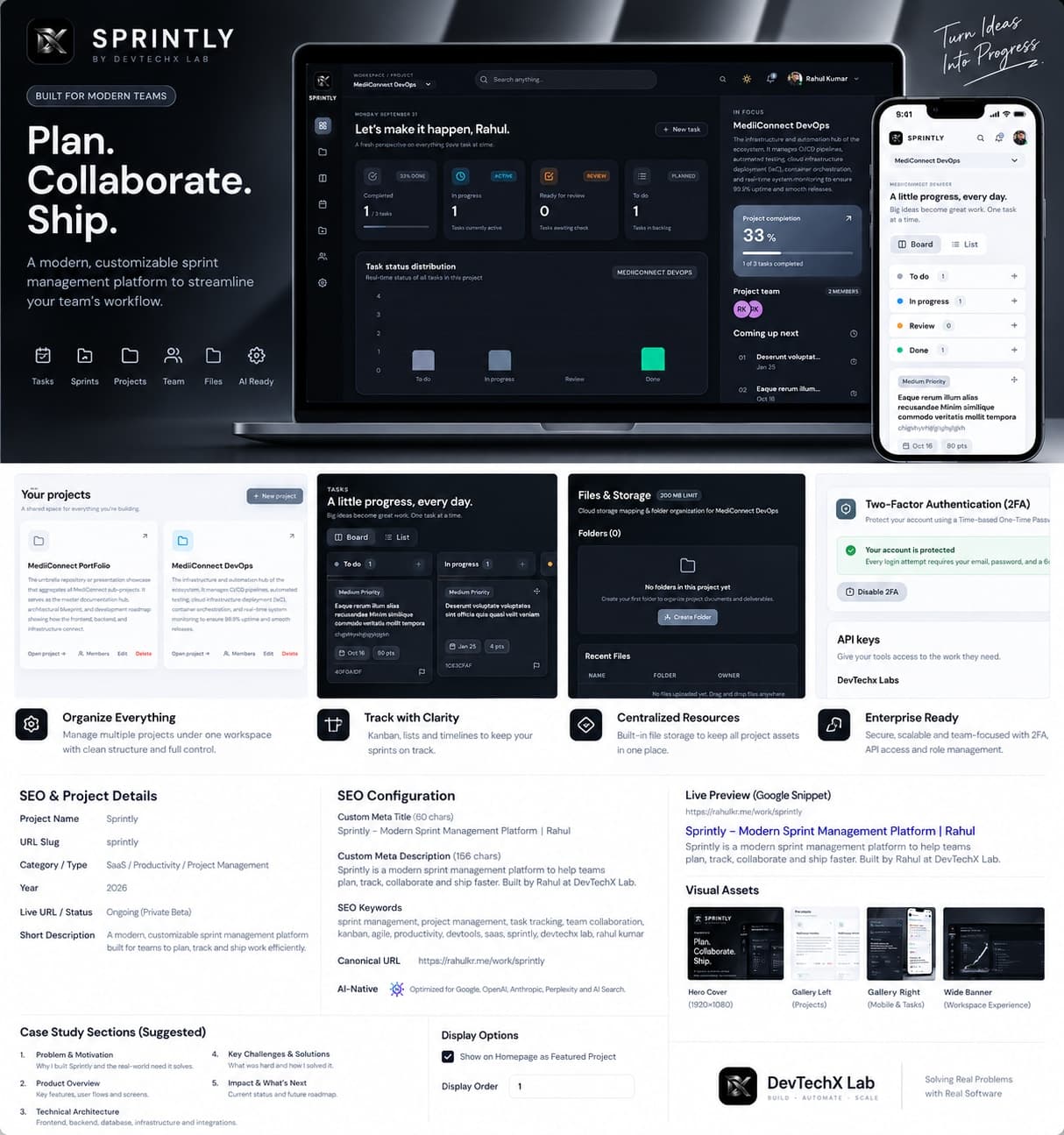
Sprintly is a project and sprint management platform I built to make engineering work feel more connected to the organization actually doing the work.
Instead of treating project management as a separate third-party tool, Sprintly is designed around an organization-first workspace where teams can manage projects, tasks, sprints, files, members, notifications, integrations, and engineering workflows from one environment.
The product is designed for teams that want a focused place to turn ideas into structured work, assign ownership, track progress, collaborate with teammates, and understand what is happening across their projects.
Why I Built It
Most project management tools solve task tracking, but the actual engineering workflow is usually spread across multiple products.
Projects live in one place, conversations somewhere else, files somewhere else, source control somewhere else, and operational information often requires switching between several systems.
I wanted to explore a different approach: an organization-aware workspace where project execution becomes the center of the product and the surrounding tools connect naturally around it.
The goal was not to build another simple Kanban board. The goal was to build a foundation that could support real teams, projects, permissions, collaboration, integrations, and operational workflows.
Organization-First Architecture
Sprintly is structured around organizations rather than individual isolated projects.
An organization can contain members, projects, and project-level workspaces. Members can participate in projects according to their access and responsibilities, while organization-level settings provide a central place to manage the team.
I designed this model so Sprintly can scale from an individual workspace into a multi-member engineering environment without changing the fundamental product structure.
The organization layer also provides the foundation for permissions, project membership, notifications, integrations, and future workspace-level automation.
Key Points
• Organization-based workspaces • Member management • Project membership • Role-aware access • Centralized organization settings • Workspace-level configuration • Scalable multi-project structure
From Ideas to Executable Work
The core of Sprintly is the project execution workflow.
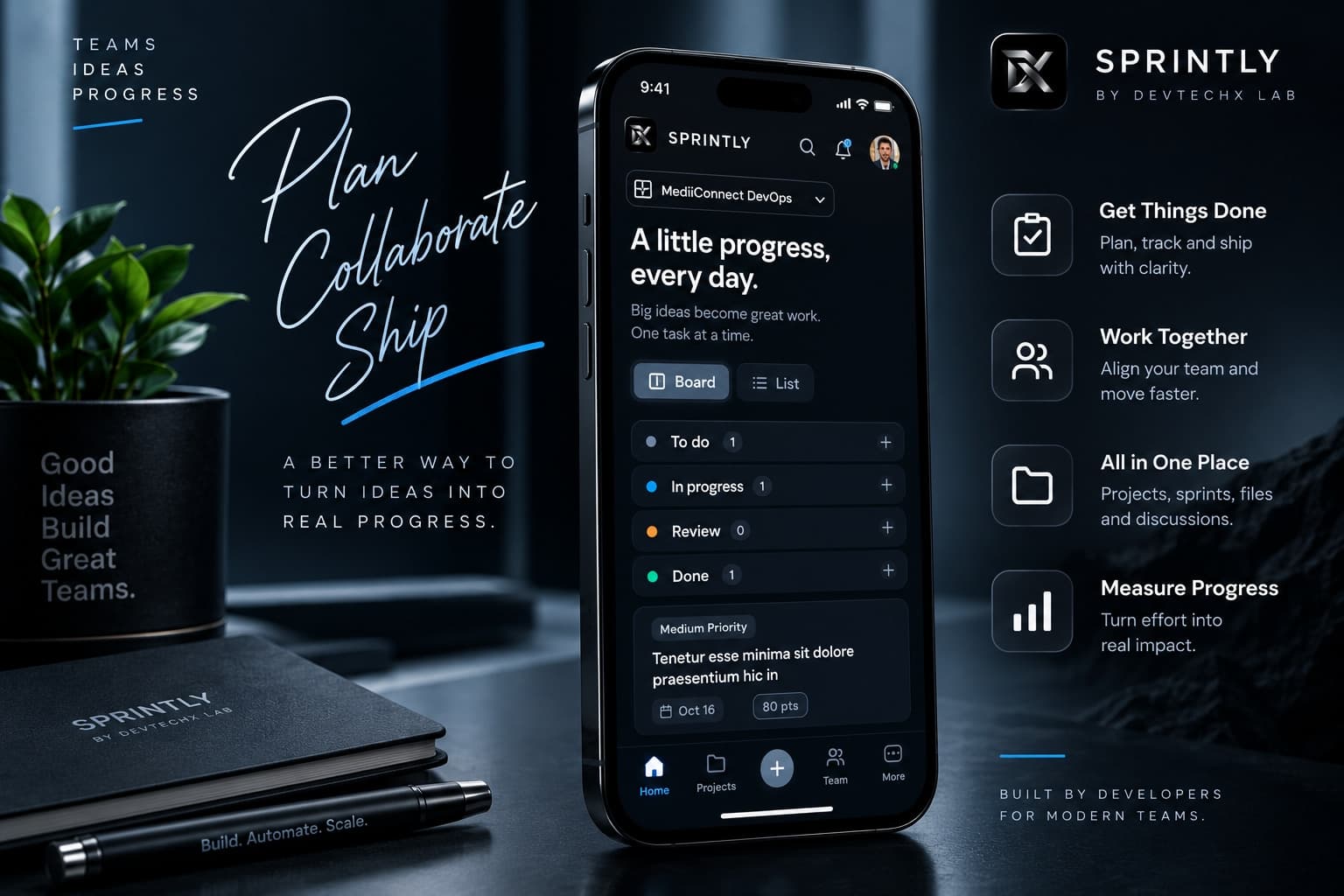
Projects provide the larger context, while tasks represent the individual pieces of work required to move the project forward. Tasks can progress through structured states such as To Do, In Progress, Review, and Done.
The product also provides multiple ways to understand the same work. Teams can use the board view for execution, list-oriented workflows for structured task management, and timeline and sprint views for planning what comes next.
This allows the same underlying project data to support both day-to-day execution and higher-level planning.
Keeping the Team in Sync
Collaboration is built directly into the workspace instead of being treated as an external layer.
Sprintly provides project members, notifications, task activity, comments, and workspace-level updates so users can understand what changed without constantly checking every project manually.
The notification system is designed around actionable events such as new tasks and comments, giving team members a central activity stream for work happening across their projects.
Beyond Task Management
Sprintly is designed as a broader engineering workspace rather than only a task board.
The platform includes project files and storage, GitHub connectivity, webhooks, background jobs, and integration-oriented infrastructure.
The files and storage layer provides a structured place for project documents and deliverables. GitHub connectivity connects development activity with the project workspace, while webhooks and background jobs provide a foundation for asynchronous integrations and automation.
This architecture makes it possible to continue expanding Sprintly toward a deeper developer operations platform rather than limiting it to conventional project management.
Security Built Into the Workspace
Because Sprintly is designed for organizational work, account and workspace security are part of the product architecture.
The platform includes organization-level access management, member management, role-aware permissions, account security controls, and two-factor authentication.
The security layer also provides API key management and integration-oriented configuration, creating a foundation for safely connecting external developer tools and services to the workspace.
What Building Sprintly Taught Me
The most interesting part of Sprintly was not implementing individual screens. It was designing the underlying product model so that projects, organizations, members, tasks, permissions, notifications, files, integrations, and background processes could work together as one system.
Building the product forced me to think beyond CRUD operations and consider how different parts of a SaaS platform depend on one another.
I also focused heavily on making the interface feel like a real product rather than an internal admin dashboard. The goal was to make project management feel focused, fast, and native to the organization using it.
Sprintly is still evolving. I am continuing to build the platform around the broader idea of creating software that helps teams organize work, reduce operational friction, and spend more time actually building.
Built Inside DevTechX Lab
Sprintly was built as part of my independent product development work through DevTechX Lab.
Rather than treating it as a portfolio-only experiment, I approached Sprintly as a real SaaS product: defining the organization model, designing the product experience, building the application architecture, implementing authentication and workspace management, creating the project and task workflows, and building the surrounding infrastructure required for future integrations and automation.
The product is part of a broader effort to build practical software products that solve operational problems for people and teams.
Where Sprintly Is Going
The current version establishes the core workspace, project, task, collaboration, security, storage, and integration foundations.
The next stage is focused on deeper automation, developer integrations, richer sprint intelligence, AI-assisted workflows, improved project analytics, and additional operational capabilities.
The long-term direction is to make Sprintly more than a place where teams record tasks — it should become a workspace where teams understand what needs to happen, coordinate execution, and move projects forward with less operational overhead.